Simon White

beamforming system in MIMO radio systems.

Understanding the Fundamentals of Beamforming in MIMO Radio Systems

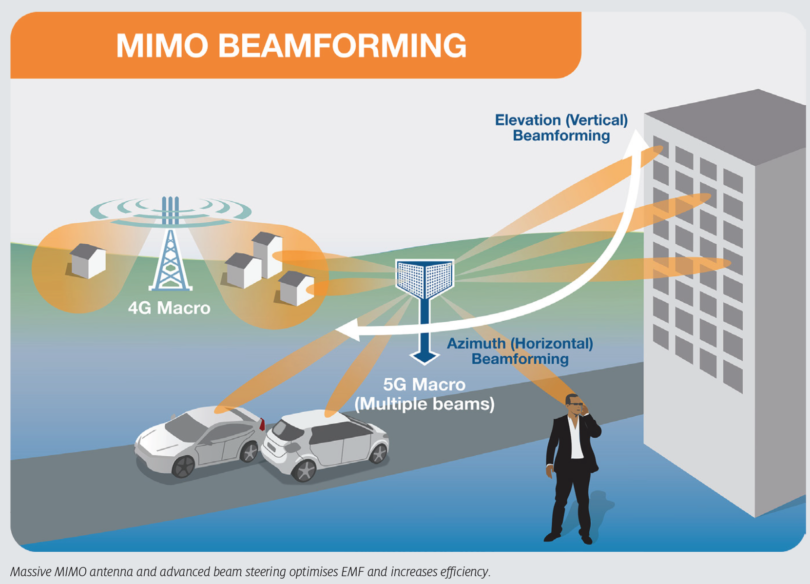
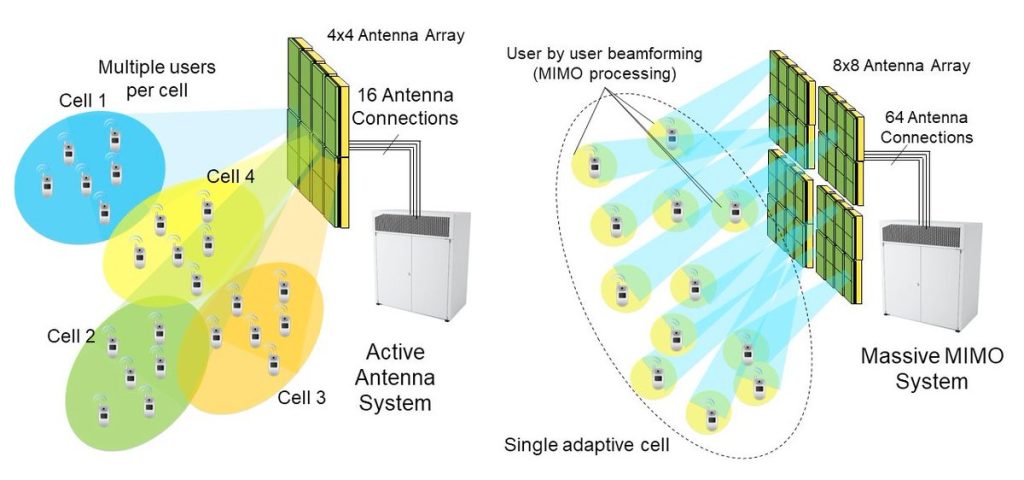
The wireless communication industry has been revolutionized by beamforming, a perplexing technique that directs radio waves towards specific directions instead of broadcasting them in all directions. Despite its decades-long existence, beamforming has gained tremendous attention lately due to the emergence of 5G and massive MIMO systems that have brought about burstiness in communications. Massive MIMO

Understanding the Fundamentals of Beamforming in MIMO Radio Systems Read More »

beamforming in MIMO radio systems.

Understanding the Basics of Beamforming in MIMO Radio Systems

Beamforming, a technique used in wireless communication systems to improve signal quality and data transmission rates, has been around for some time. However, with the emergence of 5G networks, it has gained significant attention. Beamforming techniques have become an integral part of massive MIMO systems that use multiple antennas at both ends. Massive MIMO is

Understanding the Basics of Beamforming in MIMO Radio Systems Read More »

Benefits of Beamforming in Wireless Communication Systems

Understanding the Benefits of Beamforming in Wireless Communication Systems

The main benefits of beamforming in wireless communication are a stronger signal at the receiver, longer range, less interference and more capacity. An array of N antennas adds up to 10 log10(N) dB of SNR, so 8 antennas add 9 dB, which can triple the data rate at the cell edge. The costs are hardware,

Understanding the Benefits of Beamforming in Wireless Communication Systems Read More »

MIMO Technology and its Role in Wireless Communication

Understanding MIMO Technology and its Role in Wireless Communication

The wireless communication landscape has been completely transformed by MIMO technology, providing a faster and more reliable data transfer experience. By utilizing multiple antennas at both ends of the transmission process, MIMO systems are capable of enhancing capacity while reducing interference in an unprecedented manner. This is particularly important when considering the high-speed connections with

Understanding MIMO Technology and its Role in Wireless Communication Read More »

Beamforming for Improving Wireless Communication

Understanding Beamforming: A Technique for Improving Wireless Communication

The awe-inspiring technique that has completely transformed wireless communication as we know it is none other than beamforming. By utilizing an array of antennas, this technology concentrates the transmission of signals in specific directions – a feat that results in improved signal strength and decreased interference. The potential for beamforming to shine brightest is within

Understanding Beamforming: A Technique for Improving Wireless Communication Read More »

System Performance through Optimal User Scheduling in MIMO Systems

Maximizing System Performance through Optimal User Scheduling in MIMO Systems

User scheduling in MIMO systems decides which users transmit in each time-frequency slot and, in MU-MIMO, which users share it. A scheduler that uses channel state information can exploit fading: with 10 users at 10 dB mean SNR, serving the strongest user at each instant raises throughput by about 65% over taking turns. Proportional fair

Maximizing System Performance through Optimal User Scheduling in MIMO Systems Read More »

CSI-based power allocation in MIMO systems

CSI-Based Power Allocation in MIMO Systems: Water-Filling Explained

CSI-based power allocation in MIMO systems means dividing the transmit power among the channel’s spatial modes according to how strong each one is, instead of splitting it equally. With full channel knowledge at the transmitter the best rule is water-filling, which gives more power to strong modes and turns the weakest off. It helps most

CSI-Based Power Allocation in MIMO Systems: Water-Filling Explained Read More »

Beamforming in MIMO Radio Systems

Understanding the Basics of Beamforming in MIMO Systems

MIMO beamforming means adjusting the phase and amplitude of each antenna’s signal so that the signals add up at the intended receiver instead of arriving out of step. Beamforming in MIMO systems turns several weak signals into one stronger one, with up to 10 log10(N) dB of SNR gain from N antennas. It relies on

Understanding the Basics of Beamforming in MIMO Systems Read More »

CSI compression techniques in MIMO systems

Learn how it works and its importance in MIMO systems

The enigmatic Channel State Information (CSI) is an essential ingredient in MIMO systems that enables the transmission of high-quality signals. CSI provides a window into the channel’s elusive characteristics, such as fading and interference, which are crucial for optimizing signal transmission. With MIMO systems relying on multiple antennas to transmit and receive data simultaneously, accurate

Learn how it works and its importance in MIMO systems Read More »

CSI Quantization Systems

Overview of CSI Quantization: Understanding the Basics

The enigmatic concept of CSI quantization holds tremendous weight in wireless communication systems. Its purpose is to transform continuous channel state information into discrete values, and its importance cannot be overstated. CSI feedback accuracy and reliability are directly proportional to the success of system optimization. Unraveling the mysteries surrounding CSI quantization effects requires a thorough

Overview of CSI Quantization: Understanding the Basics Read More »

Scroll to Top