Radio

How to shield and filter radio frequency designs from EMI

How to shield and filter radio frequency designs from EMI

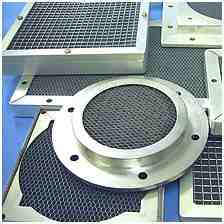
This article is part of TechXchange: Diving Deep into EMI, EMC, and Noise Members can download this article in PDF format. Suppression of RF EMI will require several solutions that designers can implement in their board design or with shielding materials. Proper electromagnetic shielding will help minimize or even block electromagnetic interference (EMI) for a

How to shield and filter radio frequency designs from EMI Read More »
Resonant cavity system for exposing cell cultures to intense pulsed RF fields Scientific reports

Abstract The IEEE and ICNIRP have set the maximum permissible exposure for an instantaneous peak electric field of 100 kV/m. However, no reason was given for this limitation. A new exposure system is designed through a detailed process of analytical analysis, numerical modeling and prototype testing. The system consists of a cylindrical re-entrant resonant cavity

Resonant cavity system for exposing cell cultures to intense pulsed RF fields Scientific reports Read More »

A metasurface-based antenna converts ambient radio waves into electrical energy: Technology could make it possible to use radio emissions from cell phone networks to wirelessly operate sensors and LEDs.

A metasurface-based antenna converts ambient radio waves into electrical energy: Technology could make it possible to use radio emissions from cell phone networks to wirelessly operate sensors and LEDs.

Researchers have developed a new metasurface-based antenna, which represents an important step in making it convenient to collect energy from radio waves, such as those in cellular networks or Bluetooth connections. This technology could potentially offer wireless power to sensors, LEDs and other simple devices with low power requirements. “By eliminating cable connections and batteries,

A metasurface-based antenna converts ambient radio waves into electrical energy: Technology could make it possible to use radio emissions from cell phone networks to wirelessly operate sensors and LEDs. Read More »

Organic semiconductors come to the 5G circuit

Organic semiconductors come to the 5G circuit

The demand for flexible and inexpensive wireless communications and applications has sparked interest in innovation in wireless energy collection. For example, scientists were able to use organic material for a new semiconductor design for radio frequency circuits. Notably, organic semiconductors have applicability in 5G applications, according to international scientists led by King Abdullah University of

Organic semiconductors come to the 5G circuit Read More »

Multistage Doherty MMIC Driver Eliminates the Need for Free Viewing

Multistage Doherty MMIC Driver Eliminates the Need for Free Viewing

The idea of ​​the Doherty amplifier is not new: this modified class-B radio frequency power amplifier (RF PA) configuration was designed by William H. Doherty of Bell Telephone Laboratories Inc. in 1936, in the early days of the high-power vacuum. tube amplifier (Fig. 1 and References 1 to 3). Since then, it has been used

Multistage Doherty MMIC Driver Eliminates the Need for Free Viewing Read More »

Energy harvesting finds a new source: RF waves

The energy harvest is showing a lot because new ways are being sought to generate electricity. One technology involves a common source: radio waves. Researchers at the University of South Florida are trying to extract energy from radio waves using synthetic materials called metamaterials, which exhibit properties not normally found in natural materials and are

Energy harvesting finds a new source: RF waves Read More »

Scroll to Top